- Home
- Artificial Lures
- Squid Jigs
What to Look For in the
Best Squid Jigs
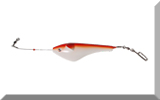
Strange looking things, squid jigs. They're designed to look and behave like the creatures that squid feed on, which is shrimp, prawns and small fish.
Some aspects of their design make them unique amongst all other fishing lures.
For instance, all of the other lures in my tackle box are designed to place a hook in the fishes mouth.
Not so my squid jigs.
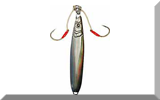
Neither do they have of which have hooks as we would know them; just sharply pointed barbless grapnel-like devices.
But there's a reason for their strange design...
Why Squid Jigs Have a Cloth-Covered Body
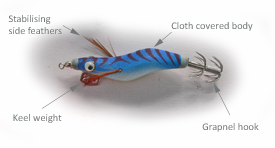 What to look for in a squid jig
Unlike fish, cephalopods (that's squid, cuttlefish and octopus) don't grab their prey with their mouths.
Having sneaked up close they shoot out two long tentacles to ensnare it, then wrap their other eight tentacles around it. Only then do they start to nibble away at it.
And this is why manufacturers of quality jigs bond a cloth finish to the surface of their lures to give the squid something grippy to hang on to.
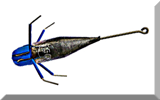
Grapnel Hooks
Having engulfed the jig in this way, the squid will now find itself impaled on the double circle of needle-sharp, but barbless, prongs - and if you don't give it any slack line it should stay that way until you lift it out of the water.
Stabilising Side Feathers
These keep the jig properly aligned and stable, and help to give it its shrimp-like action when given the appropriate jerking action by the angler.
Weighted Keel
These work along with the side feathers to keep the jig the right way up, and to improve tracking when drawn through the water.
These jigs are available in several sizes and with keels of various weights, which is normally marked on them in grams.
Useful information if you're intending to cast the jig with a spinning outfit, as it governs the rate at which the lure will sink and hence the depth at which it operates on the retrieve.
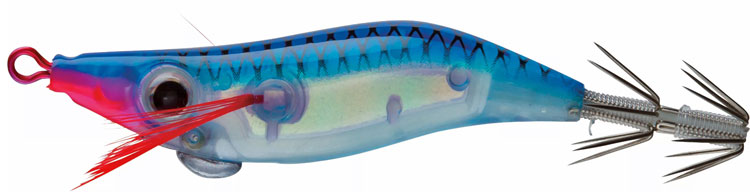
But not all of these jigs have external keels.
Those that don't are weighted internally - often very slow sinkers - and are ideal for use paternoster-style on droppers, and fished as a normal vertical jigging rig.
And cuttlefish are quite partial to them too!
How about an Octopus?
Use a heavily weighted squid jig - like the Lead Masters Magnum - which is designed to get down quickly to where the octopi lurk - on the seabed.
Grapnel hooks are again used to accommodate the octopus's similar embracing style of attack.
The lure shown here is fluorescent, which makes it ideal for fishing for these creatures after dark or in deep waters.
But Why Bother?
After all, you're not going to get an epic struggle out of either a squid or an octopus. But along with cuttlefish, they're very tasty to eat.
But you have to prepare them properly first. So...
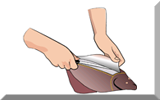
- here's how to clean them, and
- here's how to cook them
And don't forget, squid make excellent bait. Either cut into small strips to add a fish-attracting 'smell' to a lure, or fished whole on your trolling outfit. Here's how to rig a squid for trolling...
Read more about fishing with squid jigs, and catching some of those tasty cephalopods!
Recent Articles


-
Sea Fishing Rods and Reels Must Be Compatible for a Balanced Outfit
Mar 08, 21 08:30 AM
A quality reel fitted to a quality rod doesn't necessarily make it a quality outfit. Your fishing rods and reels have to be properly matched if you're to get the best out of them, and here’s how -
Essential Lure Fishing Tips That All Saltwater Anglers Should Know
Mar 08, 21 04:51 AM
Which single lure fishing tip applies to trolling, jigging, baitcasting, spinning, fly fishing and any other branch of lure fishing? Well, it is the one at the top of this list -
Vital Jig Fishing Tips That You Really Cannot Afford To Miss!
Mar 07, 21 10:20 AM
Essential jig fishing tips to help you select the right lure for successful jig fishing, together with the techniques required to get the most out of your jig fishing outfit

FTC Disclosure: In some of the articles on this site, I endorse some items of fishing gear. If you buy something through a link, I receive a small commission with no additional cost to you. Thank you for supporting this site. It is much appreciated.
New! Comments
Have your say about what you've just read! Leave me a comment in the box below.