- Home
- Fishing Tips
- Jig Fishing Tips
Jig Fishing Tips to Help You Catch More Fish
New to jig fishing, or an old hand that just wants to improve your catch rate? Either way, these jig fishing tips will go some way to put you on the road to success.
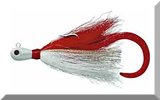
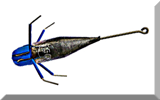
Unlike most other fishing lures, just moving a jig through the water isn't going to to motivate many fish into striking at it.
Jigs have little built-in action of their own - they all rely on the skill of the angler if they're to be irresistible to fish.
Sloppy actioned rods, stretchy nylon line and a half-hearted approach by the angler just won't get the job done.
Jig fishing success requires some energy and enthusiasm at the thick end of the rod!
Jig Fishing Tip #1 ~ Get Rid of those Treble Hooks
Quite a few fishing jigs come fitted with treble hooks, and there are three good reasons why you should replace these with a single hook:~
- You have three times the opportunity for getting snagged up;
- There's a high chance of foul-hooking a fish, causing a deal of damage to it before it rips itself free;
- When unhooking your catch, it's all too easy to get a hook embedded in yourself. Incidentally, if this happens to you at any time (and it will - it happens sooner or later to all of us) here's how to get a fish hook out of yourself.
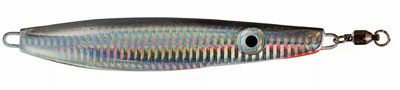
So, get rid of treble hooks and attach a pair of Assist Hooks.
Jig Fishing Tip #2 ~ Using 'Assist Hooks'
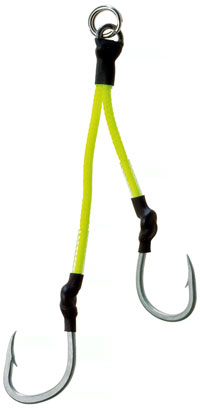
Just what are Assist Hooks?
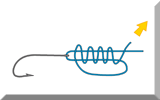
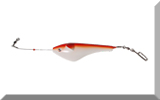
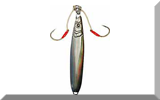
Well, they're nothing more than a single hook on a short length of super-tough braid line which is cow-hitched to the split ring on the eye of the jig - and they're also known as stinger rig hooks.
Assist Hooks are normally sold in packets of two, and it's common practice to use a pair of them, as shown here.
Using stingers in this way gets you secure hook-ups with short-striking fish that you'd otherwise lose, and prevents your fish from levering the hook out of its mouth - which would not be fair play at all!
Jig Fishing Tip #3 ~ Enhancing the Jig


Many will tell you that the pork scent gets even better results than a piece of squid or a sliver cut from the belly of a fish. It certainly stays on the hook longer, and it definitely works.
Jig Fishing Tip #4 ~ What to Look For in a Jigging Rod
When you're jigging a lure you're always working - you never put the rod down. It's tiring stuff, jig fishing, so it's important that the rod is comfortable to use. It needs to be light, so a carbon blank is the way to go for a specialist jig rod.
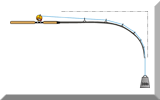
It needs to be long enough to give some action to the lure, but not so long as to wear your arms out. So a carbon rod of around 6ft to 8ft will be about right for vertical jigging, on the stiff side and with a fast taper.
What you definitely don't want for jig fishing is a soft, through-actioned rod that well absorb all the energy that you're putting into it - that needs to be transferred through the rod tip to the jigging lure.
And as you'll be using braid lines the line guides should be ceramic lined and of the best quality to prevent grooving.
Jig Fishing Tip #5 ~ Which Reel for Jigging?
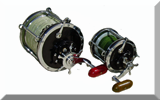
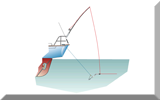
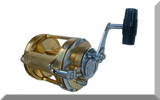
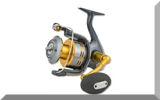
If you're casting your jig lure, then it's a matter of personal preference between a spinning reel and a conventional reel. But if you're vertical jigging from a drifting boat then it's rather more clear cut - use a traditional multiplier reel.
Why? Well, as you'll be using your reel largely as a winch to wind a heavy fish up from the depths, then the traditional reel - not having the bale arm of the spinning reel to turn the line through 90 degrees - will always be more efficient for this purpose.
Some reels of this type are fitted with a Line Counter, which used in conjunction with an electronic fish-finder will enable you to get your lure down to exactly the right depth every time.
Jig Fishing Tip #6 ~ The Best Line for Jigging
It's vital that the action at the rod top is transferred to the jig, which may well be several hundred feet below if you're deep jigging. If you've got nylon monofilament on your reel, then much if not all of that action will be lost in the stretch of the line, leaving the jig hanging lifeless below. Which is not good ..
There's one type of line to have on your reel that superior to all others for jigging, and that's one of the non-stretch super-braid lines. You should forsake all others.
As with all forms of lure fishing, I think it's worth using a fluorocarbon leader for its near-invisibility. OK, it's a bit pricey, but anything we can do to catch more fish is surely worth a few extra dollars.
Jig Fishing Tip #7 ~ Jigging for Bait
Jigging with tiny lures is a great way to catch baitfish, such as sandeels, herring, sardines and mackerel. By mackerel I mean the Atlantic Mackerel that we get around the UK shores during the summer months, not the Spanish and King varieties that frequent warmer seas. Sadly, 'our' mackerel max-out at around 2lb or so. Few attain this weight though; most will be no more than 10oz. Now if only they went to 10lbs ...
But they don't, which is why they're not held in high regard by 'real' anglers other than as baitfish - and jigging is the way to catch them.
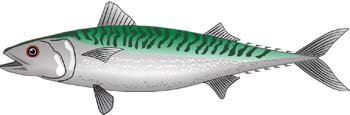 The Atlantic Mackerel - great for bait and good to eat!
Atlantic mackerel congregate in large shoals, often in the top 30ft (10m) of the water column where they feed on shoals of brit. Catching them is simple. All you need string of small feather-type lures - the Sabiki Bait Rig is perfect for this - and a lead sinker on the end of the string, and start jigging.
These rigs come in strings of 8 lures, each tied-off on a short snood from the main trace. If you luck into a shoal of mackerel it's not uncommon to get a fish on every hook, which can be too much for the strength of the snoods.
Here's a tip - rather than let a 'full-house' of fish reduce the number of lures on your rig, cut off the hook points on alternate ones so you've got 4 or 5 that will catch and a similar number that will act just as attractors. The odds are that overall, you'll catch more mackerel and retain your string of Bait Catchers for longer.
Recent Articles


-
Sea Fishing Rods and Reels Must Be Compatible for a Balanced Outfit
Mar 08, 21 08:30 AM
A quality reel fitted to a quality rod doesn't necessarily make it a quality outfit. Your fishing rods and reels have to be properly matched if you're to get the best out of them, and here’s how -
Essential Lure Fishing Tips That All Saltwater Anglers Should Know
Mar 08, 21 04:51 AM
Which single lure fishing tip applies to trolling, jigging, baitcasting, spinning, fly fishing and any other branch of lure fishing? Well, it is the one at the top of this list -
Vital Jig Fishing Tips That You Really Cannot Afford To Miss!
Mar 07, 21 10:20 AM
Essential jig fishing tips to help you select the right lure for successful jig fishing, together with the techniques required to get the most out of your jig fishing outfit

FTC Disclosure: In some of the articles on this site, I endorse some items of fishing gear. If you buy something through a link, I receive a small commission with no additional cost to you. Thank you for supporting this site. It is much appreciated.
New! Comments
Have your say about what you've just read! Leave me a comment in the box below.