- Home
- Fishing Tips
- Fishing Gear Tips
Fishing Gear Tips That Save Money And Catch Fish!
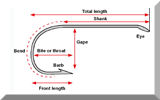
One of the best fishing gear tips to save yourself some cash is to buy smaller items of fishing hardware - hooks, swivels, snaps, beads etc - in bulk, and only take what you need on your fishing trips. Buying them in packs of 25, 50 or even 100 is much cheaper than buying these items in packets of 5 or 10.
Hook points soon become blunt, but the smaller ones - particularly if you've bought them in bulk - are cheap enough to discard after each trip and use fresh ones on your next fishing session.
Larger hooks, say upwards of size 3/0, can be sharpened if you've got the right tools and know what you're doing, but it's all too easy to increase the angle of the hook point - which will blunt it even more.
The test for sharpness is to drag the point of the hook lightly over your thumbnail. If it tends to dig in, leaving a white scratch, it's sharp. If it doesn't, either sharpen it or bin it.
Fishing Gear Tips #1 ~ Keep Those Hooks Sharp!
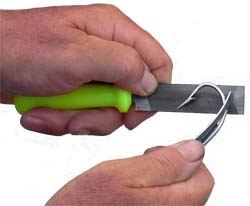
To do what we expect of them, all hooks must be sharp - very sharp. And this applies not just to your bait hooks, but those attached to your lures too. Check the point before each use and touch it up with a Hook File as necessary.
The technique is to stroke the file towards the bend of the hook - not towards the point. Use the file on the two flats to ensure that not just the point is sharp, but also that the flats converge in a razor edge.
After a few strokes, try the thumbnail test. If your technique is correct it will soon be 'up to scratch'!
Click Here to read all lot more about fish hooks ...
Fishing Gear Tips #2 ~ Line
There were so many fishing line tips that we've given them their own page - and you can read it here...
Fishing Gear Tips #3 ~ Weights and Sinkers
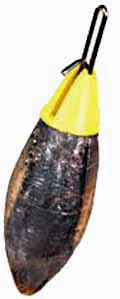
Surfcasting weights have to do two things:~
- aid long casting, and
- hold your terminal rig firmly on the sea bed
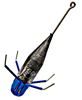
Torpedo-shaped leads like the one on the right have the aerodynamic qualities for long casting.
If there's a tide running, you'll need the wired version like the one on the left to hold it in place. But if that's not an issue, the plain version will offer less air resistance and get you increased distance.
The wired version is essential for uptide ledgering from a boat, where the tide would otherwise soon sweep the gear astern.
Fishing Gear Tips #4 ~ Lures
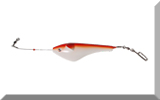
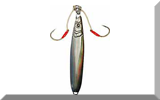
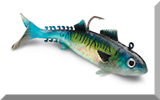
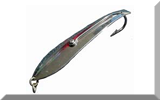
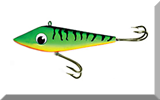
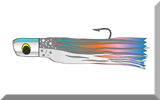
Lure selection should be made on the basis of its similarity to the baitfish your intended quarry is likely to be searching for.
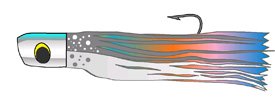
Size - whatever you may have heard to the contrary - does matter. And maybe colour too. If you believe in the oft-quoted maxim, it's light-coloured lures for bright days, and dark ones for dull days.
But all the stuff about lure fishing has been covered elsewhere - so click here for some great tips on fishing with lures ...
Fishing Gear Tips #5 ~ Swivels
There are four distinct types of swivels - barrel swivels, crane swivels, ball bearing swivels and aussie swivels ...
Barrel Swivels
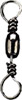 |
The barrel swivel is the cheapest and will be the first to fail as the load on it increases.
My advice would be to give these a miss and spend a little more on the much more efficient crane swivels. |
Crane Swivels
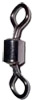 |
Crane swivels are an improved form of the barrel swivels, differing from them in their construction. They're usually manufactured with a nickel-plated bronze barrel, within which both ends of the wire pins now terminate.
The bearing surfaces are larger, friction losses proportionally lower, as a result of which they're both stronger and more efficient than barrel swivels. |
Ball Bearing Swivels
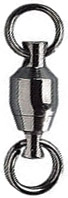 |
Ball bearing swivels are designed to operate effectively even when under the loads imposed by the fast-swimming predators of the open ocean. Manufactured in stainless steel with internal ball bearings, they turn freely under all loads within their range.
Their high quality engineering and materials makes them expensive, but their superior strength and performance when you really need it means they're worth it. |
Aussie Swivels
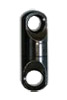 |
Aussie swivels are the strongest of all swivels, and are the ones to use for the largest tuna and ocean gamefish.
Machined from solid brass and with integral eyes, they're exceptionally durable and reliable. But they're also made in small sizes which makes them suitable for connecting your trolling leader to your main line. Depending on the type of line guides on your trolling rod, you may find that you'll be able to wind them directly onto your reel. |
And Finally ~ Don't Buy Cheap!
Buy economically, yes - but don't make your purchase on price alone.
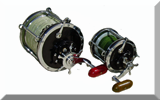
In particular, cheap rods and reels are a menace and sooner or later - probably sooner - they will let you down.
Stick to the manufacturers you're familiar with and you won't go far wrong.
Recent Articles


-
Sea Fishing Rods and Reels Must Be Compatible for a Balanced Outfit
Mar 08, 21 08:30 AM
A quality reel fitted to a quality rod doesn't necessarily make it a quality outfit. Your fishing rods and reels have to be properly matched if you're to get the best out of them, and here’s how -
Essential Lure Fishing Tips That All Saltwater Anglers Should Know
Mar 08, 21 04:51 AM
Which single lure fishing tip applies to trolling, jigging, baitcasting, spinning, fly fishing and any other branch of lure fishing? Well, it is the one at the top of this list -
Vital Jig Fishing Tips That You Really Cannot Afford To Miss!
Mar 07, 21 10:20 AM
Essential jig fishing tips to help you select the right lure for successful jig fishing, together with the techniques required to get the most out of your jig fishing outfit

FTC Disclosure: In some of the articles on this site, I endorse some items of fishing gear. If you buy something through a link, I receive a small commission with no additional cost to you. Thank you for supporting this site. It is much appreciated.

New! Comments
Have your say about what you've just read! Leave me a comment in the box below.