- Home
- Fishing Line
- Braided Fishing Line Knots
Braided Fishing Line Knots that Won't Let You Down
If you learn these few braided fishing line knots you won't suffer from braid line's tendency to let go at the connections.
The advantages of braid fishing line are well-known - primarily its small diameter, high strength and almost total lack of stretch - but it does have a reputation for being 'difficult' when it comes to tying knots in it.
This isn't really deserved.
Ok, some knots that are fine in nylon monofilament line just won't hold in braid, so they should be avoided - so it's just a matter of knowing the correct knots to use for braid and learning to tie them properly.
Where Will You Need To Tie Braided Fishing Line Knots?
The normal use for braided line is as your main reel line, with your leader or terminal rig being made up with either nylon monofilament or fluorocarbon line. So the two places where you'll have to tie knots in your braid line are:~
- at the connection with the leader, and
- at swivels and snaps
Let's take a look at these braided fishing line knots in turn ...
Connecting Braided Line to Mono Leaders
It's always worth using a fairly long mono leader with braid line even if you're jigging, trolling or downtiding and not casting with it, owing to its zero stretch.
With the fish almost beaten and close to the boat, a last ditch attempt to to shake itself free of the hook might well be successful if you haven't got a length of stretchy mono to absorb the shock.
The mono leader will be much thicker than the braid reel line, so a special knot is needed for this connection.
The Albright Knot
Here's how to tie it...
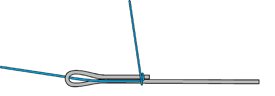 Stage 1
First, double back the end of the mono leader and thread the braid through the eye produced.
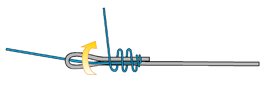 Stage 2
Next, start whipping back the braid over itself and the mono leader.
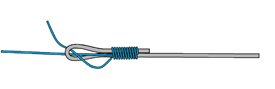 Stage 3
Then, make about ten turns before tucking the tag end of the braid through the loop such that it emerges on the same side as it entered.
 Stage 4
Finally, lubricate with saliva before smoothly pulling the knot up tight.
Trim both braid and mono ends, and you've tied the first of the two braided fishing line knots you need to know.
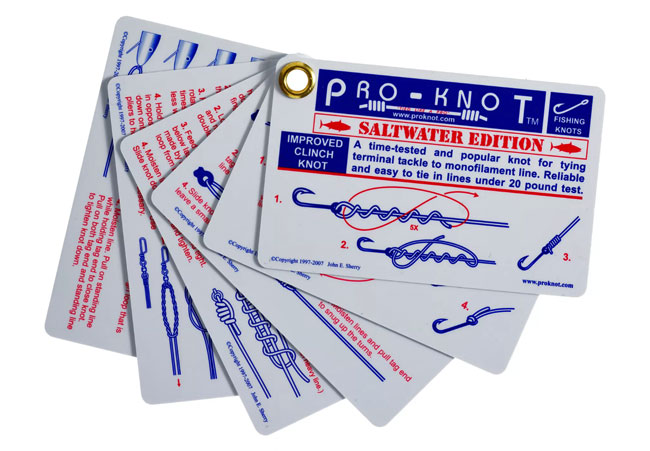
Connecting Braided Line to Swivels and Snaps
If you're not using a leader at the end of your braided reel line, then you'll want to connect a swivel or some other connector to attach your terminal tackle. Here's the knot to use for that - the rather unimaginatively named 'Braid Knot'.
The Braid Knot
 Stage 1
First, double the line and pass the resulting loop through the eye of the swivel.
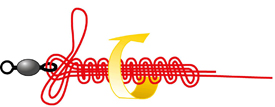 Stage 2
 Stage 3
Then, from a point a few centimeters from the eye, take about 8-10 turns back toward the swivel, finally threading the doubled line through the gap between the turns and the eye.
Finally, lubricate it with saliva and then cinch it up tight with a steady, continuous pull.
Artwork by Andrew Simpson
Recent Articles


-
Sea Fishing Rods and Reels Must Be Compatible for a Balanced Outfit
Mar 08, 21 08:30 AM
A quality reel fitted to a quality rod doesn't necessarily make it a quality outfit. Your fishing rods and reels have to be properly matched if you're to get the best out of them, and here’s how -
Essential Lure Fishing Tips That All Saltwater Anglers Should Know
Mar 08, 21 04:51 AM
Which single lure fishing tip applies to trolling, jigging, baitcasting, spinning, fly fishing and any other branch of lure fishing? Well, it is the one at the top of this list -
Vital Jig Fishing Tips That You Really Cannot Afford To Miss!
Mar 07, 21 10:20 AM
Essential jig fishing tips to help you select the right lure for successful jig fishing, together with the techniques required to get the most out of your jig fishing outfit

FTC Disclosure: In some of the articles on this site, I endorse some items of fishing gear. If you buy something through a link, I receive a small commission with no additional cost to you. Thank you for supporting this site. It is much appreciated.

New! Comments
Have your say about what you've just read! Leave me a comment in the box below.